Skip to content
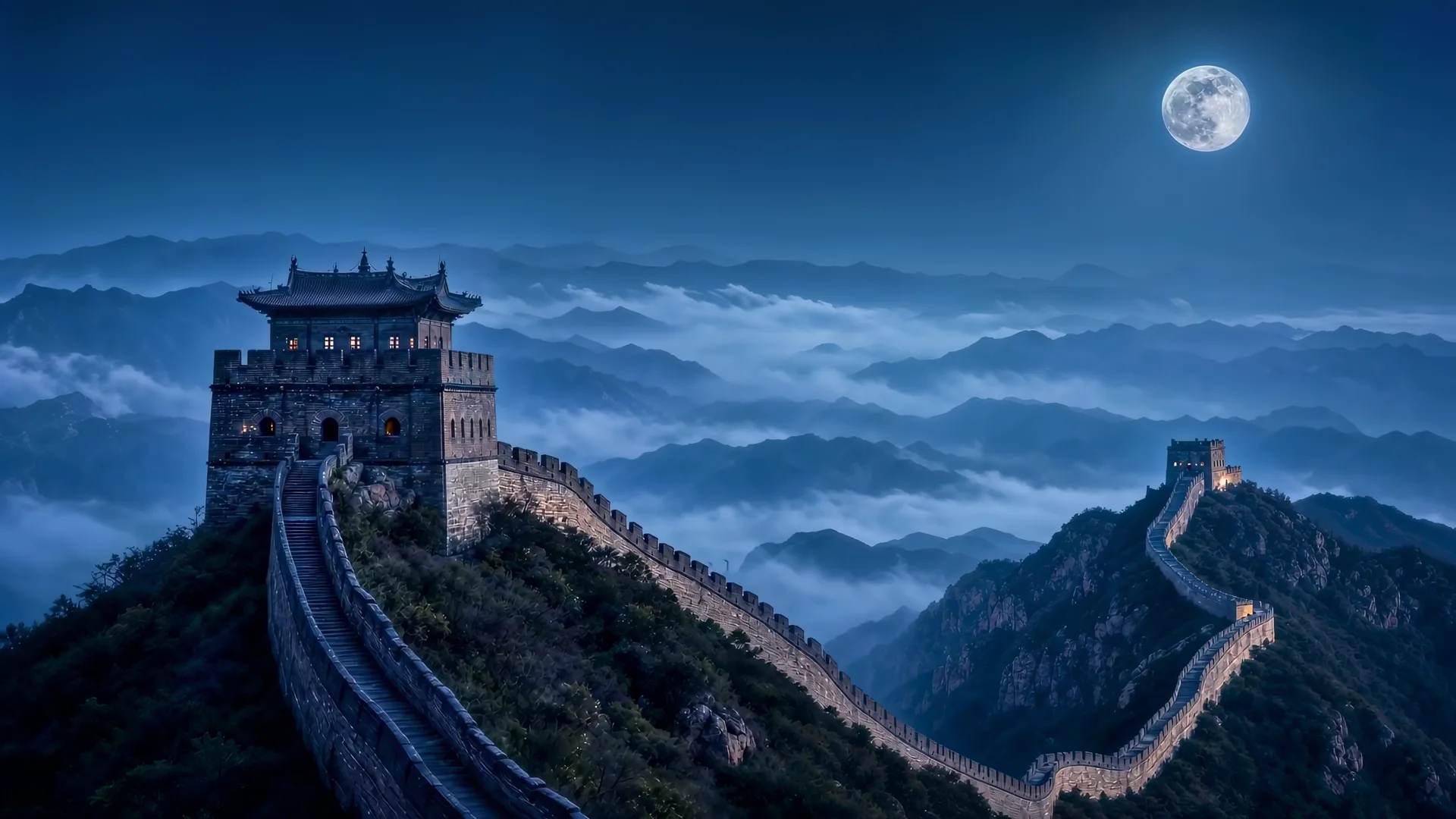
The Great Wall of China at night beneath a full moon across misty mountains
A Civilization Written Across Mountains · 一座写在山河之间的文明工程

The Great Wallof China

万里长城
UNESCO 1987
Scale & Survey

A structure measured not in meters, but in centuries.

01 · Total Length
21,196+km

Surveyed length across all dynasties (2012).

02 · Construction Span
2,300+ yrsspan

From the Warring States period to the late Ming.

03 · Provinces Crossed
15regions

Liaoning to Gansu, traversing northern China.

04 · Watchtowers
25,000structures

Beacon, observation, and garrison towers combined.

05 · Highest Point
5,000 mabove sea level

Jiayuguan western frontier, Qilian foothills.

06 · World Heritage
1,987UNESCO

Inscribed under criteria (i)(ii)(iii)(iv)(vi).

Heritage Atlas

An interactive atlas of every surviving stone.

Plot 42,073 located heritage records from the 43,809-record survey (walls, passes, beacon towers, and trenches) across the full northern frontier. Filter by type, dynasty, and province; read preservation status through the line itself.

43,809
Heritage records
15
Provinces
11
Dynasties
Dynastic Chronology

Two millennia of hands laid stone upon stone.

楚 · 齐
Chu · Qi
7th–4th c. BCE

Earliest defensive walls of warring states.

Qin
221–206 BCE

First emperor unifies and links existing walls.

Han
206 BCE–220 CE

Wall extended west to protect Silk Road.

北魏
N. Wei
386–534

Northern border consolidated against steppe nomads.

Sui
581–618

Massive labor levies repair earthen walls.

Jin
1115–1234

Outer line of fortifications across Mongolia.

Ming
1368–1644

The brick-and-stone wall the world remembers.

Architectural System

Seven elements, one machine of vigilance.

04020301050607
Component
敌楼
Watchtower

Garrisoned two-storey towers spaced every 50–200 m, providing observation, shelter, and crossfire.

A wall that spoke in fire and smoke.

Beacon towers stood within sight of one another along the entire ridge. A single column of smoke at dawn could carry a warning from the Hexi Corridor to the gates of Beijing in a single day: the world's first continental signal network, written in fire across the mountains.

Signal propagation: West → East at ≈ 750 km / day
Beacon Chain
Range
≈ 5–10 km
Day signal
Wolf-dung smoke
Night signal
Dry brushwood fire
Records
Han bamboo slips, Juyan
Featured Sections

Five places where the wall speaks most clearly.

Badaling section of the Great Wall of China in Beijing
Plate 01 · Beijing
八达岭
Badaling
Coordinates
40.3587° N · 116.0137° E
Province
Beijing
Length
7.6 km
Era
Ming · 1505

The first stretch opened to visitors. Restored stone battlements arc through forested ridges north of Beijing: the canonical postcard, but no less monumental for it.

Read the visitor guide
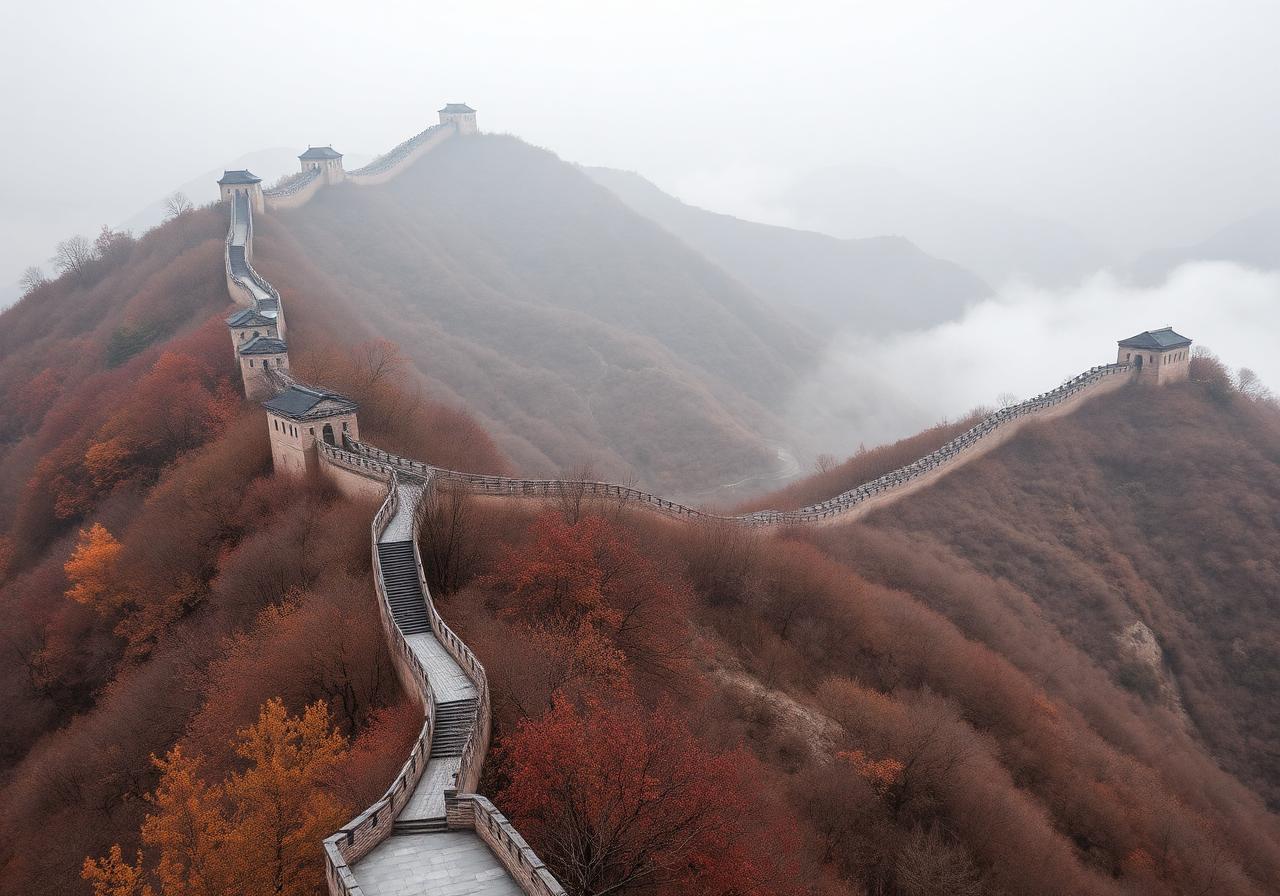
Mutianyu section of the Great Wall of China in Beijing
Plate 02 · Beijing
慕田峪
Mutianyu
Coordinates
40.4319° N · 116.5681° E
Province
Beijing
Length
5.4 km
Era
Ming · 1368

Twenty-two watchtowers in close succession, set against autumn ridges. Built atop earlier Northern Qi foundations and reinforced under generals Xu Da and Qi Jiguang.

Read the visitor guide
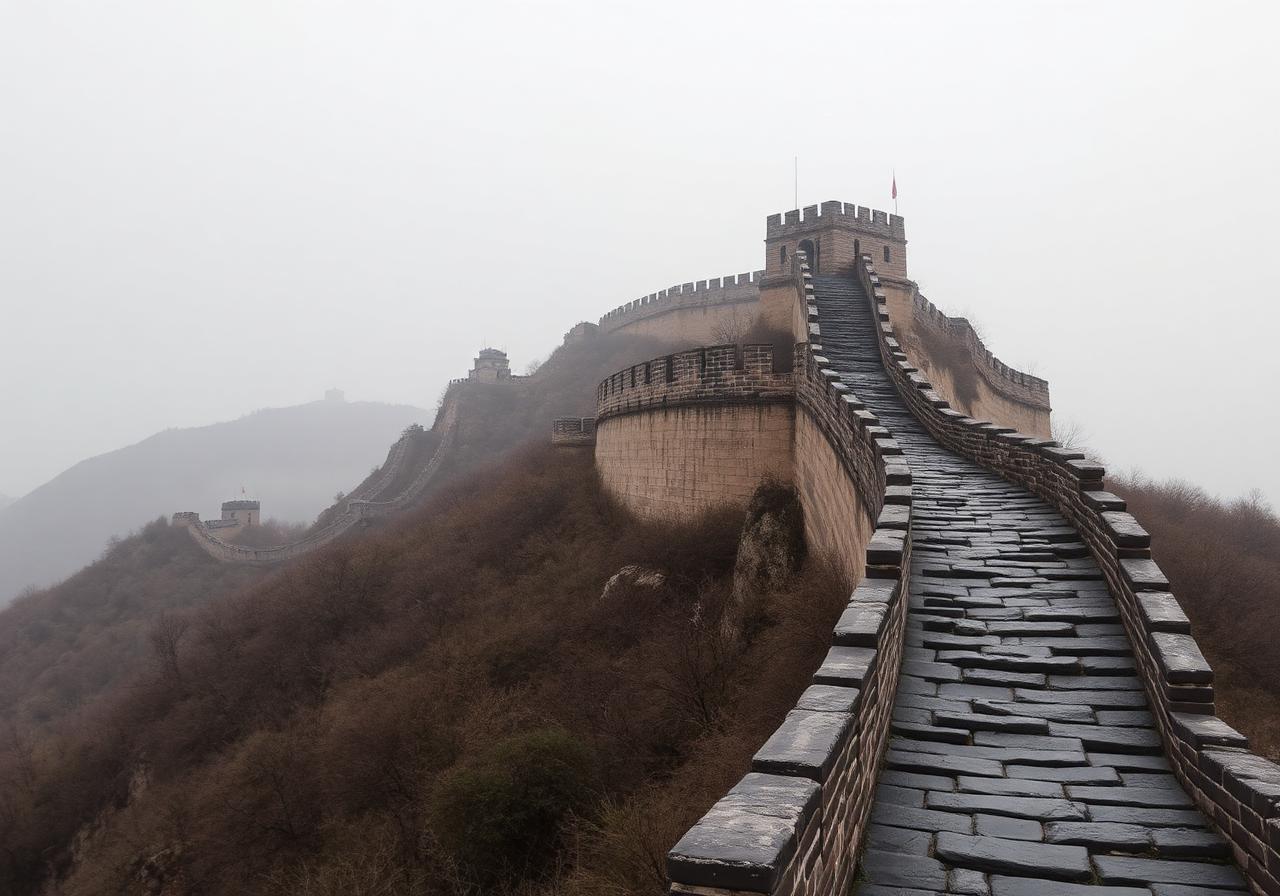
Jinshanling section of the Great Wall of China in Hebei
Plate 03 · Hebei
金山岭
Jinshanling
Coordinates
40.6717° N · 117.2436° E
Province
Hebei
Length
10.5 km
Era
Ming · 1567

Wild, unrestored, austere. Stone slabs rise and fall along a serrated ridgeline: the wall as the masons left it, weathered four centuries by snow and wind.

Read the visitor guide
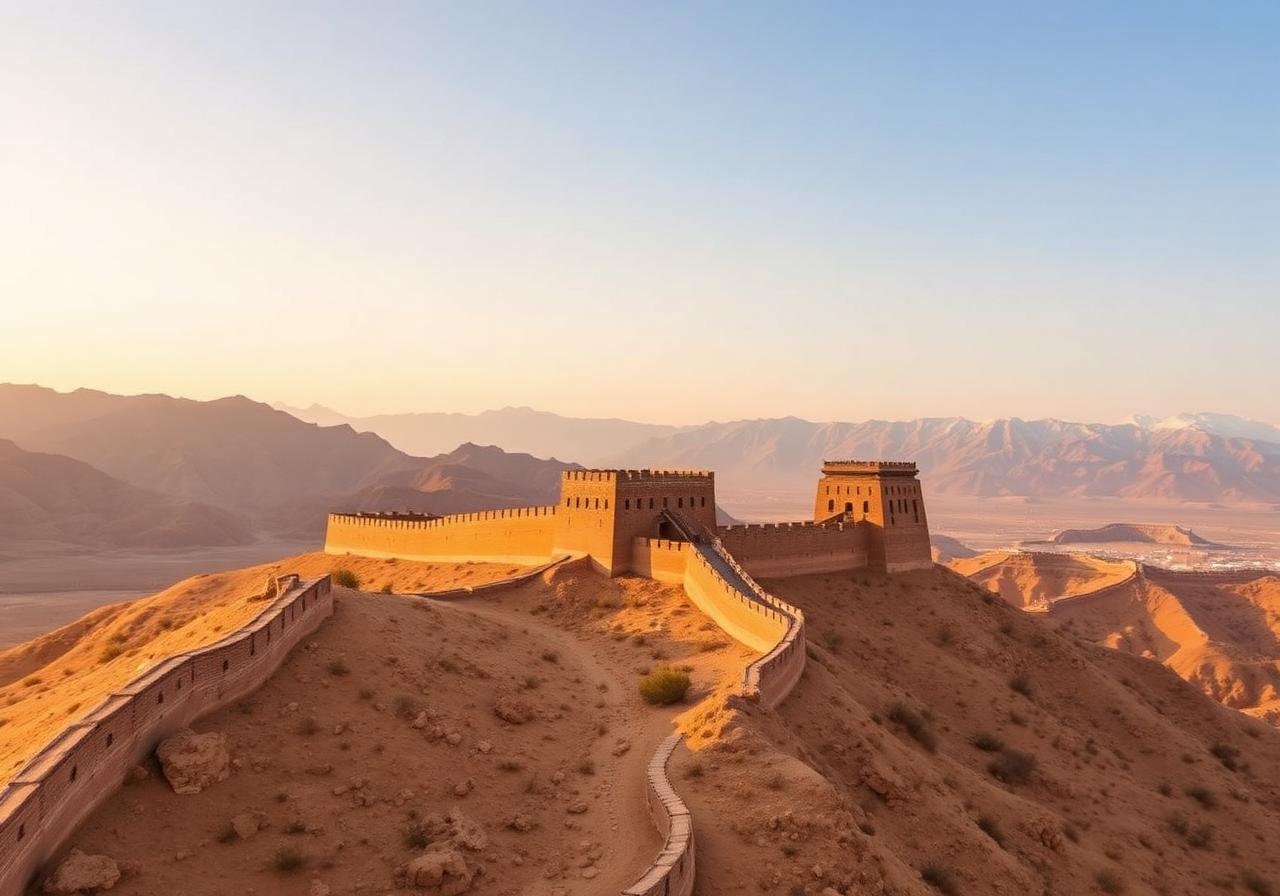
Jiayuguan section of the Great Wall of China in Gansu
Plate 04 · Gansu
嘉峪关
Jiayuguan
Coordinates
39.8017° N · 98.2867° E
Province
Gansu
Length
Fortress
Era
Ming · 1372

The wall's western mouth. A trapezoidal earth-and-brick fortress isolated in the Gobi, framed by the snowfields of the Qilian Shan: the edge of the empire.

Read the visitor guide
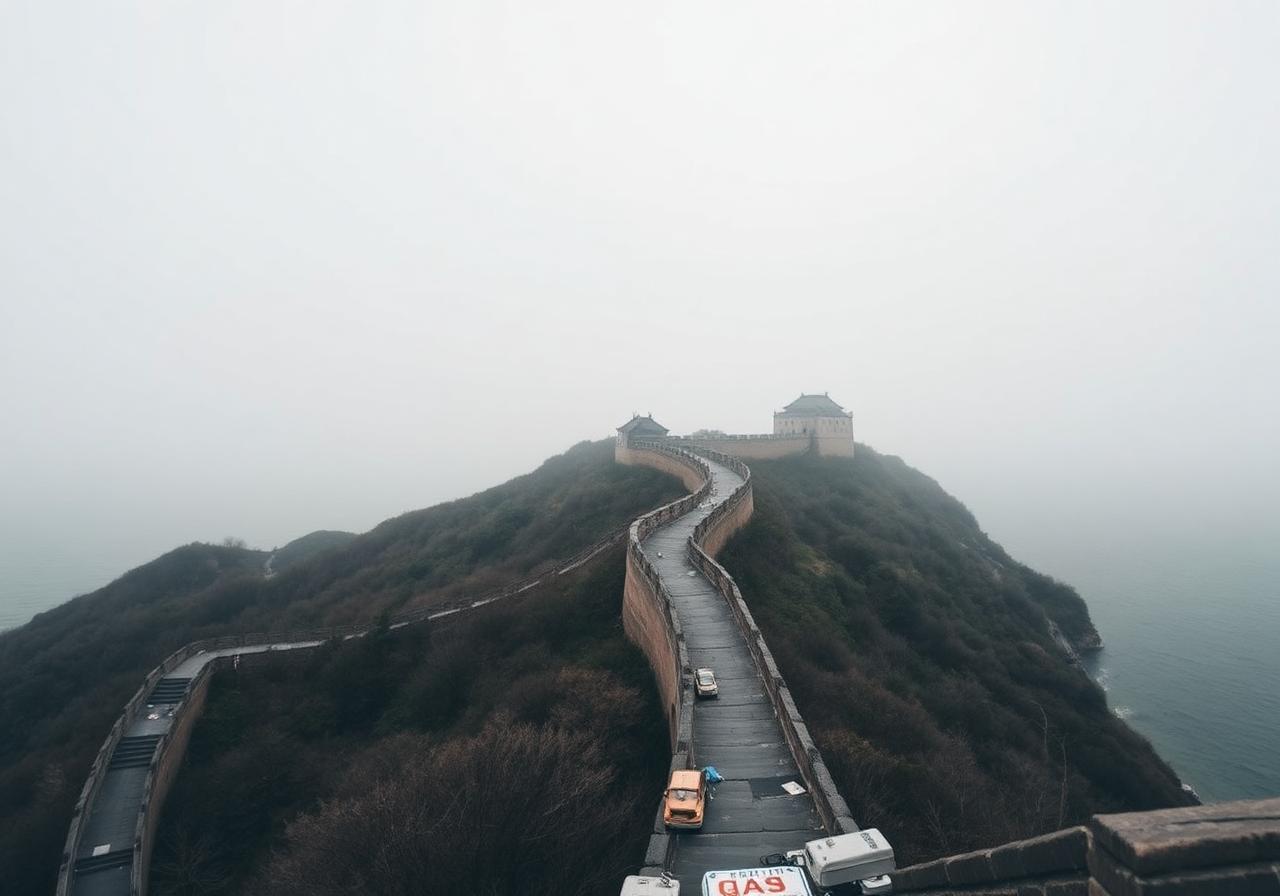
Shanhaiguan section of the Great Wall of China in Hebei
Plate 05 · Hebei
山海关
Shanhaiguan
Coordinates
40.0103° N · 119.7536° E
Province
Hebei
Length
Fortress
Era
Ming · 1381

Where the wall meets the sea. The Old Dragon's Head plunges into the Bohai Gulf: the eastern terminus, the first morning light of the empire.

Read the visitor guide

Meaning: From Defense to Heritage

“It was never a single wall,nor a single answer.It was a civilization’s long, patient sentencewritten across the mountains,first in fear, then in stone,finally in memory.”
Essay · From Defense to Heritage

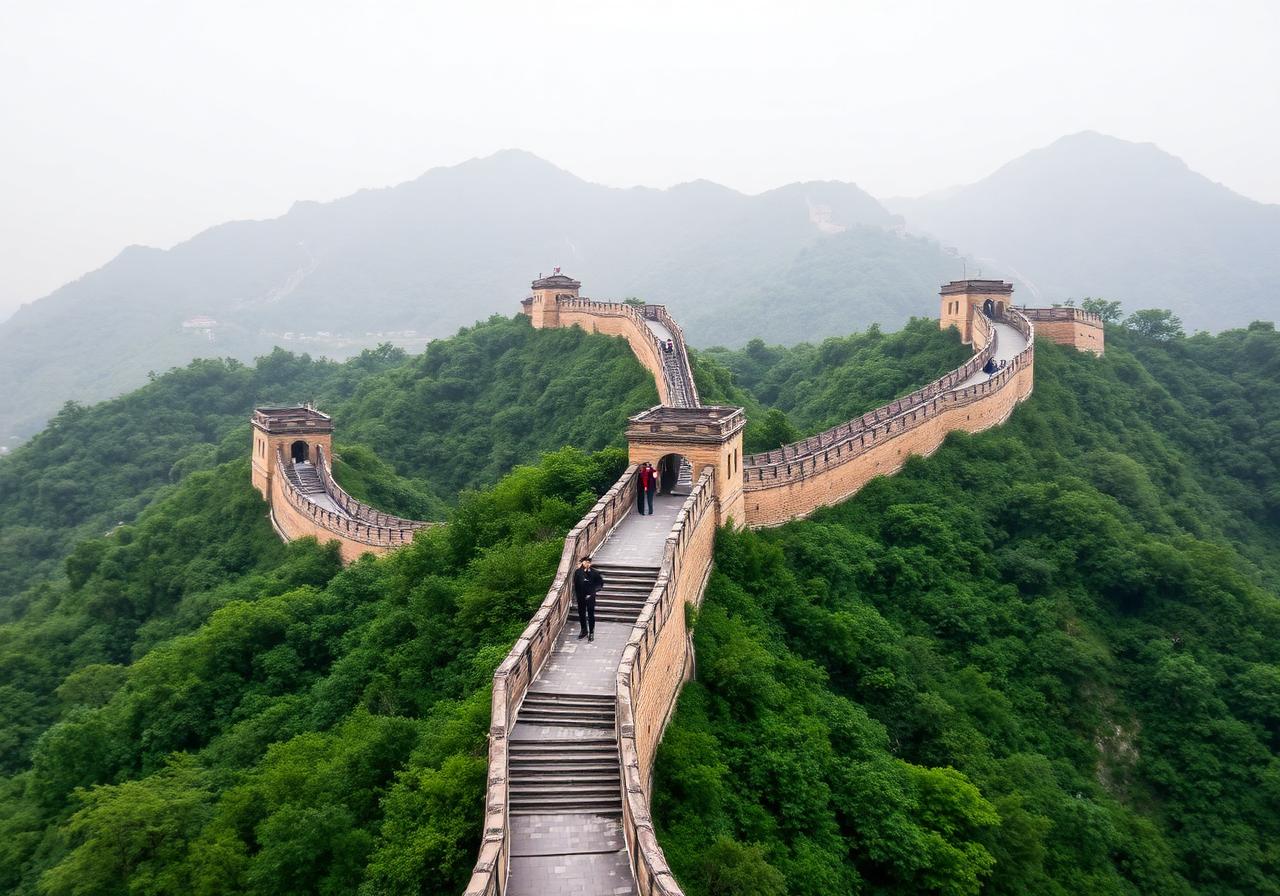
For more than two thousand years the wall served as a frontier, not a boundary drawn on a map but an instrument of statecraft. It regulated trade along the Silk Road, taxed caravans, garrisoned soldiers, signalled raids by smoke at dawn and fire at night.

After the Ming, the wall slowly emptied of its purpose. Empire turned inward; the steppe quieted; the bricks were quarried by villagers for houses. What remained was no longer a defense system but a question, asked by every dynasty and every traveller who walked it: what does a people build, when it builds across a thousand years?

In 1987 UNESCO inscribed the wall as a single property. Today it is read less as fortification than as landscape: a continuous sculpture binding desert, grassland, ridge, and sea into one civilizational gesture.
UNESCO Inscription · 1987
Reference
438
Criteria
(i)(ii)(iii)(iv)(vi)
State Party
China
Type
Cultural
Area
≈ 21,196 km

"An absolute masterpiece, not only because of the ambitious nature of the undertaking but also because of the perfection of its construction."

Facts & FAQ

Questions the wall keeps answering.

Length, builders, survivors, myths: the most-asked questions about the Great Wall of China, answered from the 2012 national heritage survey and the historical record.

How long is the Great Wall of China?

The Great Wall measures 21,196.18 km (13,170.70 mi) in total across all dynasties, according to China's 2012 national heritage survey. The Ming-era wall alone runs 8,850 km (5,500 mi).

Can the Great Wall of China be seen from space?

No. The Great Wall cannot be seen from the Moon, and is only barely visible from low Earth orbit under ideal conditions. NASA and astronauts (including China's Yang Liwei) have confirmed this; the myth dates back to a 1754 letter.

How long would it take to walk the entire Great Wall?

Walking the full 21,196 km would take roughly 18–20 months (about 540–600 days) of continuous hiking. Most expeditions instead cover a single section over 2–4 weeks.

Which dynasties built the Great Wall?

The Great Wall was built and rebuilt by more than nine dynasties over about 2,300 years (7th century BC to 1644 AD). Qin Shi Huang unified earlier walls around 214 BC, and the Ming dynasty (1368–1644) built most of the sections that survive today.

Where is the Great Wall of China located?

The Great Wall spans 15 northern provinces and regions, from Shanhaiguan in Hebei (east) to Jiayuguan in Gansu (west). About 31% of its sites are in Inner Mongolia and 19% in Hebei.

How many people died building the Great Wall?

No reliable count exists. Scholarly estimates (all approximate) commonly cite over 400,000 deaths across centuries of construction from forced labor, disease, and accidents. No human remains have been found within the wall itself.

Why was the Great Wall built, and was it effective?

The Great Wall was built to defend China's northern border against nomadic invasions. It was effective in some eras (notably the Han against the Xiongnu) but was ultimately breached, most decisively during the 13th-century Mongol conquest.

How many Great Wall heritage sites survive today?

The 2012 national survey documented 43,809 heritage records: 10,073 wall sections, 29,558 individual structures, 2,223 passes and fortifications, 1,769 border trenches, and 186 associated relics. Of these, 42,073 carry verified geometry and are mapped in this archive.

Which section of the Great Wall should I visit?

For a first visit, the usual order is Badaling Mutianyu Jinshanling Simatai. Badaling is the most visited and easiest to reach from Beijing; Mutianyu is fully restored with 22 watchtowers and fewer crowds; Jinshanling (125 km / 78 mi northeast of Beijing) is among the best-preserved and ideal for hiking; Simatai retains its original Ming appearance and is famous for night visits. Farther afield, Shanhaiguan, the “First Pass Under Heaven” where the wall meets the sea, and Jiayuguan, the Ming wall’s western terminus fortress in the Gansu desert, bookend the classic Ming line.
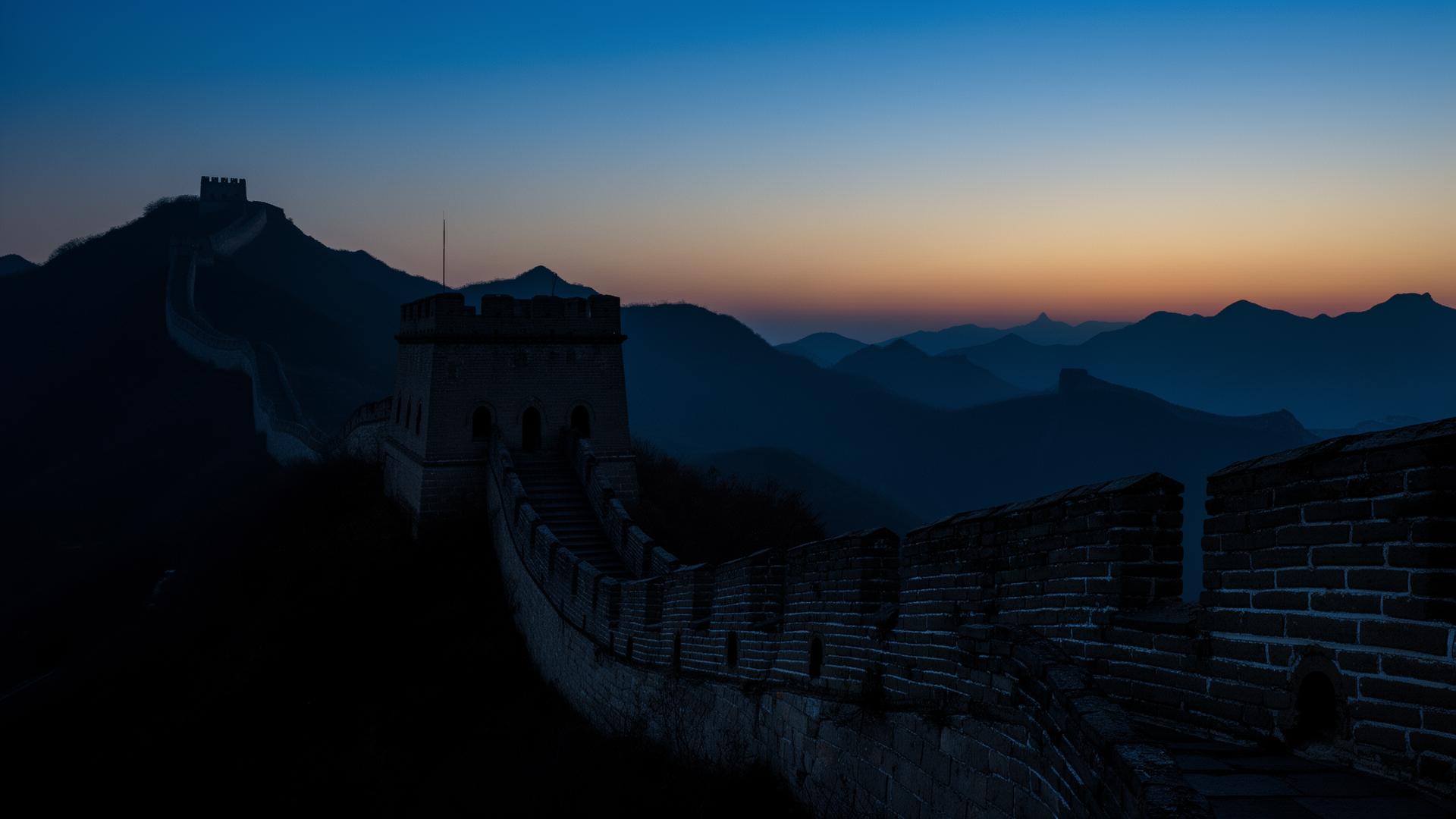
The Great Wall of China at dusk winding across mountain ridges
Invitation

Begin the journey
across mountains.

跨越山川的旅程
Publisher
Great Wall Archive
Edition
MMXXVI
Coordinates
N 40°25′ · E 116°34′
License
CC BY-NC 4.0