History of the Great Wall of China
长城的历史
By Great Wall Archive · Updated 2026-08-01
The Great Wall was built over more than 2,300 years — begun as border walls between warring Chinese states in the 7th century BC, unified under the Qin, pushed west by the Han, dug as trenches by the Jin, and perfected in brick and stone by the Ming before construction ended in 1644. This is the whole arc, dynasty by dynasty, mapped from China's 43,809-record national survey.
Walls before the empire
7th century BC – 221 BC
The Great Wall did not begin as a defense against the steppe. The earliest long walls were built by Chinese states against each other, in the centuries of fragmentation historians call the Spring and Autumn and Warring States periods. Some scholars count the Fangcheng — the “Square Wall” of the southern state of Chu, first mentioned in the 7th century BC — as the earliest Great Wall of all. The oldest long wall that still survives on the ground is generally held to be the Qi wall, raised across the hills of Shandong centuries before the Qin unification.
By the late Warring States period the pattern was set. States facing the northern grasslands — Qin, Zhao, Yan — extended their walls along the steppe frontier, learning that a wall was as much a border-marker and administrative line as a fortification. When one state finally swallowed the rest, those separate frontier walls became raw material for something larger.
Qin: the first Great Wall
221 – 206 BC
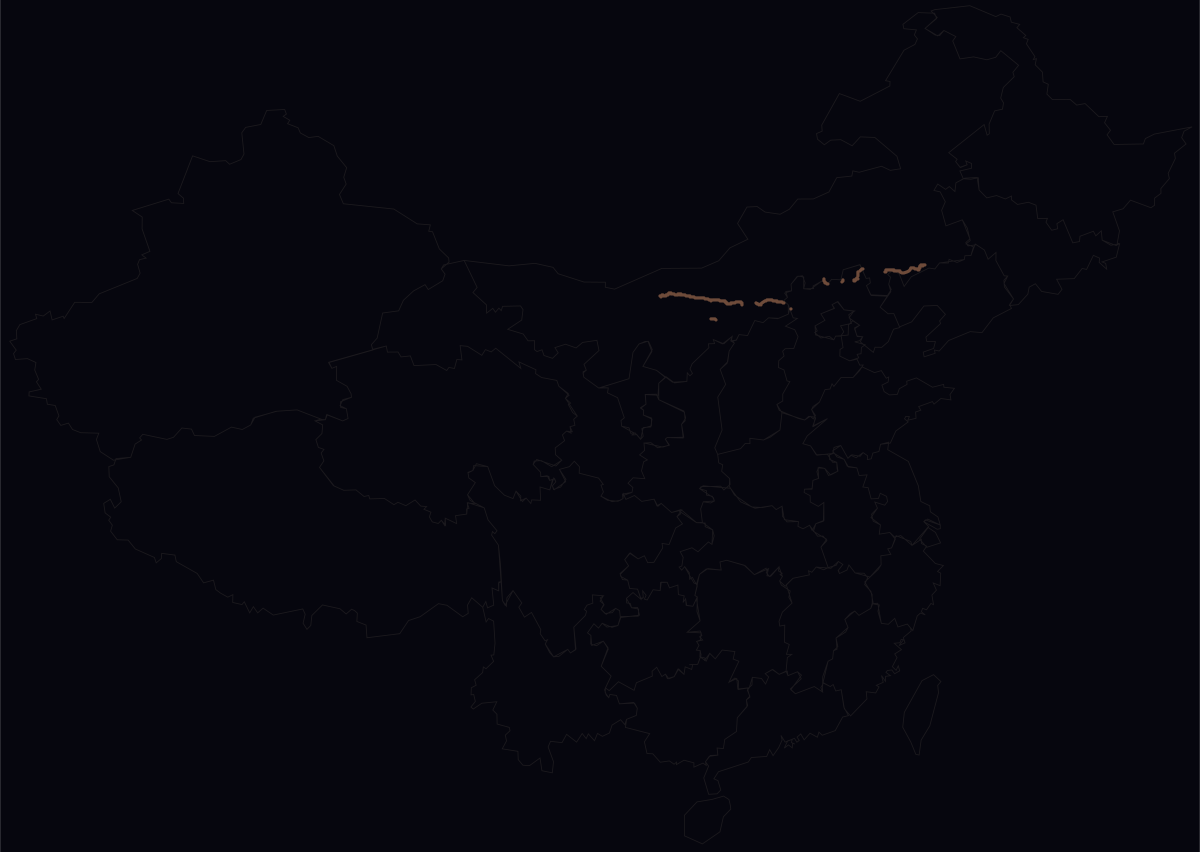
After unifying China in 221 BC, the First Emperor ordered the walls of the conquered states joined and extended into a single frontier system arcing along the northern loop of the Yellow River — the first wall that can properly be called the Great Wall. The work was done by a joint military-civilian force: garrison troops on the frontier and conscripted laborers marched north in their hundreds of thousands.
The Qin wall was rammed earth, raised fast and at brutal human cost — the resentment it bred fed directly into the legends of buried workers that still circulate today, and into the dynasty's own collapse within fifteen years of the unification. But the idea survived every dynasty that followed: a managed, fortified line where farmland meets steppe.
Han: the wall goes west
206 BC – AD 220
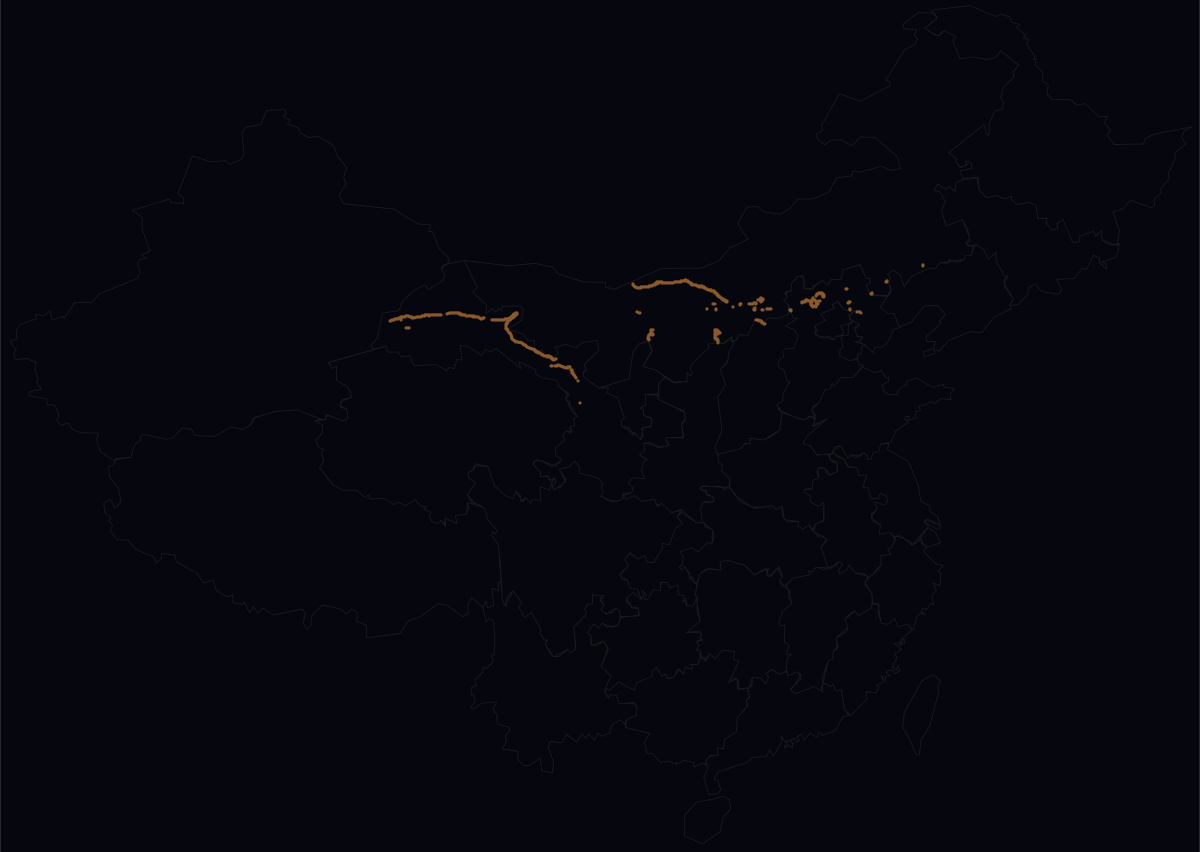
The Han dynasty inherited the Qin line and did what no dynasty would do again: pushed it far to the west. As Han envoys and caravans opened the routes later named the Silk Road, the wall followed to shield them — through the Hexi Corridor, the narrow passage between the Tibetan Plateau and the Mongolian steppe, and on into present-day Xinjiang, where Han beacon towers still stand in the desert further west than any Ming builder ever worked.
The Han wall was earth, gravel, and whatever the desert offered — in the driest stretches, alternating layers of tamarisk branches and sand that have outlasted two thousand years. Along it ran the beacon system: towers within sight of one another, passing smoke signals by day and fire by night from the far frontier back toward the interior.
The divided centuries
AD 386 – 618
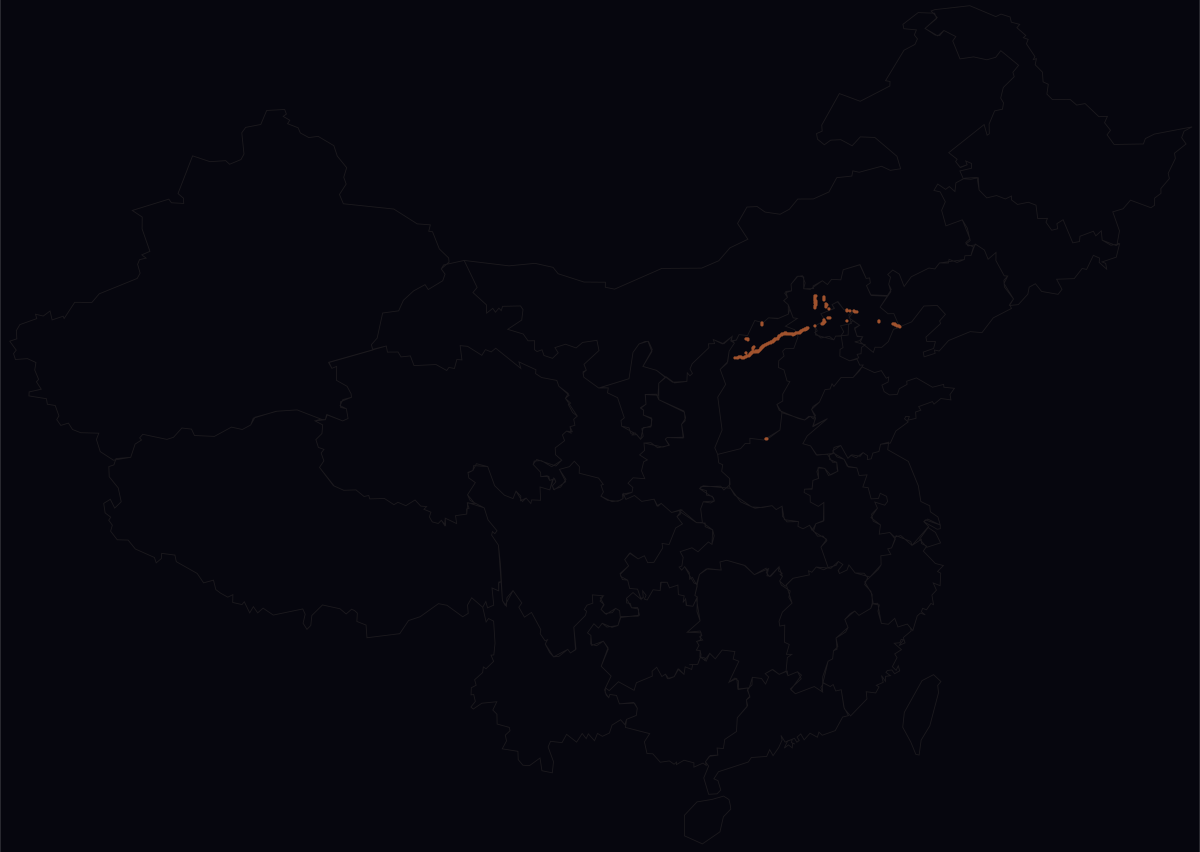
When the Han order collapsed, wall-building passed to an unexpected set of hands: northern dynasties founded by steppe peoples themselves. The Northern Wei — founded by the Xianbei, a proto-Mongolic people — walled their frontier against the nomads they had left behind. Their successors kept building: the Eastern Wei, the Northern Zhou, and above all the short-lived Northern Qi, one of the busiest wall-builders in the whole record, who fortified the mountain passes of Shanxi and Hebei in the mid-6th century.
The Sui dynasty, reunifying China in 581, carried the habit into the new empire before the Tang set it aside — the Tang preferred cavalry and diplomacy, and for three centuries the wall fell quiet. The lines the Northern Qi traced through the mountains did not go to waste: the Ming would later follow and rebuild many of them in stone.
Liao and Jin: the wall as a trench
AD 907 – 1234
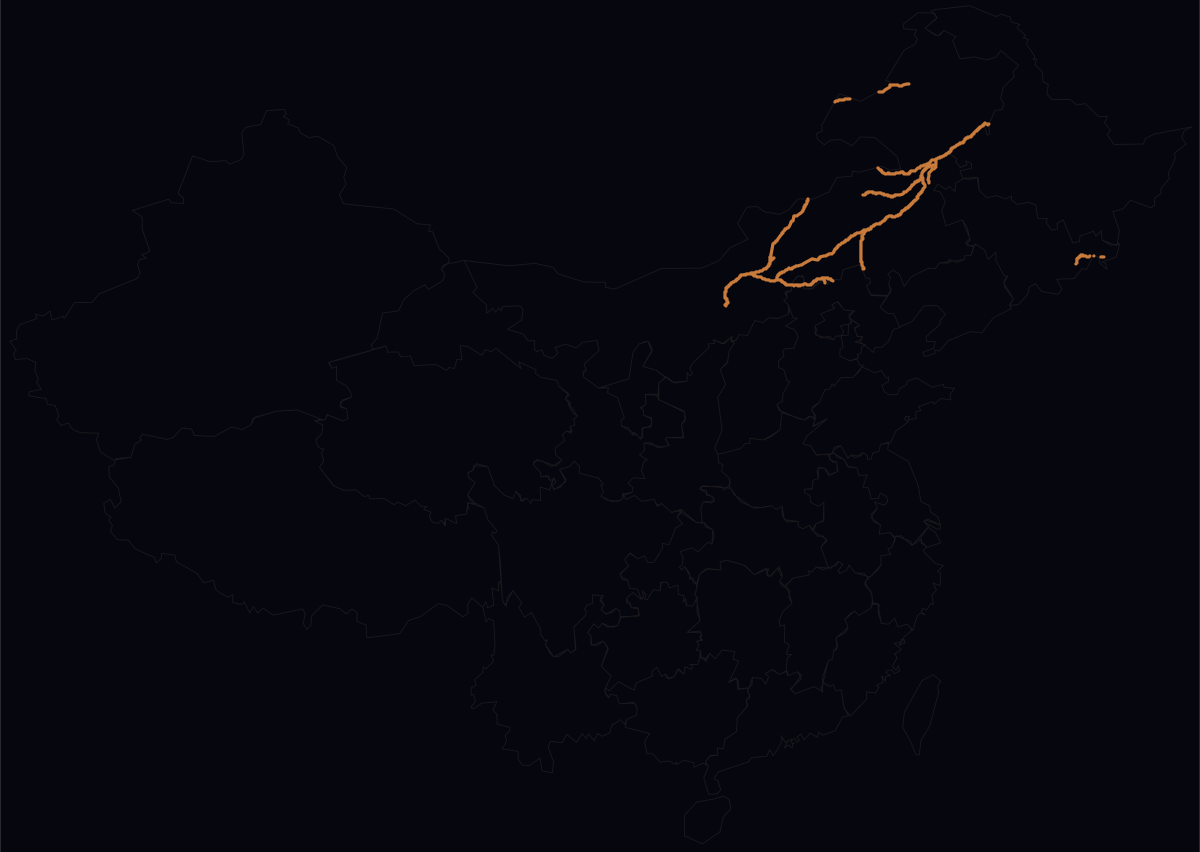
The Khitan-founded Liao and then the Jurchen-founded Jin ruled the north from outside the old wall line — and built their own defenses still further north, against the rising power of the Mongol steppe. Where rammed-earth walls were impractical on open grassland, the Jin dug instead: the jièháo, or border trenches, ditch-and-embankment lines swept in great arcs across Inner Mongolia and the northeast.
The trenches are the Great Wall's least famous major system and one of its largest: the survey records 1,769 trench structures, and they are a major reason Inner Mongolia holds nearly a third of all Great Wall resources. They are also a lesson the Ming took to heart — no barrier saved the Jin when the Mongols came; Chinggis Khan's cavalry crossed the trench lines, and the Jin fell in 1234.
One correction the trenches force on the familiar story: the Great Wall was not a Han-Chinese project against “barbarians.” Steppe-founded dynasties — Xianbei, Khitan, Jurchen — were among its most committed builders.
Ming: the wall of the postcards
1368 – 1644
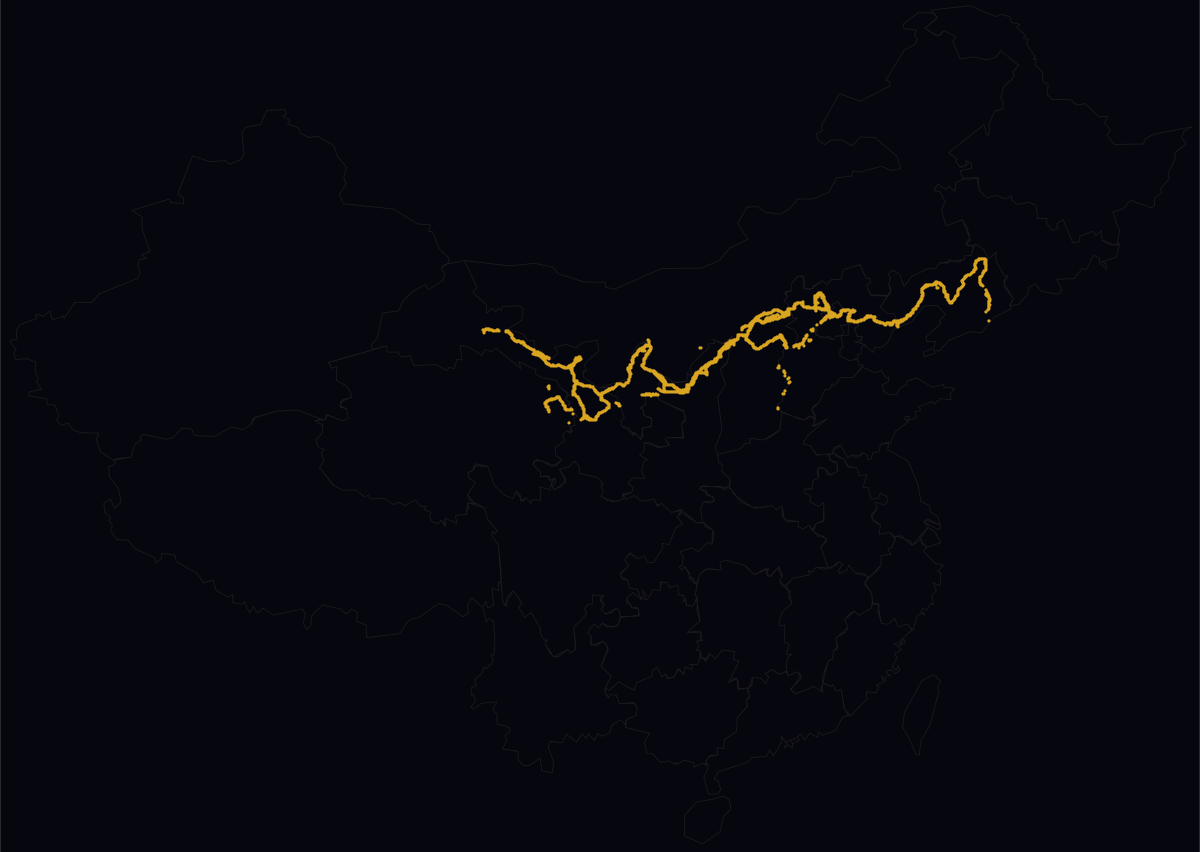
Having driven the Mongol Yuan dynasty back to the steppe, the Ming faced two and a half centuries of pressure from the north — and answered with the most sophisticated wall ever built. The Ming system, officially measured at 8,851.8 km, runs from the Jiayuguan fortress in the Gobi to the sea at Shanhaiguan and on to Hushan on the Korean border: 6,259.6 km of constructed wall, 359.7 km of trenches, and 2,232.5 km of natural barriers enrolled into the line.
Early Ming walls were still earth. The shift to the brick-and-stone battlements of the postcards came in waves, accelerating after the Tumu Crisis of 1449 — when a Mongol ambush captured the reigning emperor himself — and through the 16th-century garrison reforms. Professional crews of masons, stonecutters, bricklayers, and carpenters worked under hierarchies of overseers; the brick-clad sections consumed roughly 6,000 bricks per metre of wall.
The Ming also ran the numbers. One frontier official calculated in the Chenghua era (1465–1487) that military operations in his region would cost three times what wall-building would — the court chose the wall. It worked as a system of control and delay rather than an absolute seal: the same records show the wall breached again and again, yet garrisoned, signalled, and rebuilt until the dynasty itself fell in 1644 — when the gates at Shanhaiguan were opened, not stormed.
After the Ming: from frontier to heritage
1644 – today
The Qing dynasty ruled both sides of the frontier at once, and the wall lost its purpose overnight. Large-scale building stopped; for three centuries the wall was quarried by villagers, crossed by railways, and worn down by wind and rain. Of the more than 21,000 km the modern survey records, only about 2,000 km can be called well preserved today, and roughly 6,500 km have no visible above-ground remains at all.
The modern chapter is one of rediscovery. Restoration of showcase sections near Beijing began in the 1950s; UNESCO inscribed the Great Wall as World Heritage Site 438 in 1987; and between 2007 and 2012 China conducted the first full survey in the wall's history, walking every known remain to produce the official length of 21,196.18 km and a catalogue of 43,809 individual structures — the dataset this archive maps. Scholars suspect the story is still unfinished: the construction recorded in historical sources exceeds the length verified so far.
Quick answers
When was the Great Wall of China built?
Across more than 2,300 years, with major construction peaks under the Warring States (475–221 BC), Qin (221–206 BC), Han (206 BC – AD 220), Northern Dynasties (420–589), Jin (1115–1234), and Ming (1368–1644). The sections tourists visit today are almost all Ming work.
Who built the Great Wall?
A joint military-civilian workforce: garrison troops plus conscripted or hired laborers, organized under professional crews and overseers in the Ming era. Nor was it one people's project — steppe-founded dynasties such as the Northern Wei and Jin were among its major builders.
Why was the Great Wall built?
Originally to mark political boundaries between states; over time it took on military defense, and as a frontier institution it acquired border administration, trade regulation, and taxation roles as well.
When did construction of the Great Wall stop?
Large-scale building ended with the Ming dynasty's fall in 1644. The succeeding Qing dynasty ruled both sides of the frontier and had no need for the wall, which passed from military line to heritage monument.
Related
Sources
Great Wall Archive. “History of the Great Wall of China.” https://greatwallarchive.com/great-wall-history